Payroll for Construction Companies: Prevailing Wage, Job Classification & Workers' Comp
Running payroll for a construction company is harder than running it for most businesses. Pay rates can change from job to job. Some projects require extra weekly reporting. And the type of work each person does affects what you pay for workers' comp.
Prevailing wage, job classification, and workers' comp often cause confusion. Below, we explain what each one means for your payroll and how managing them in one system helps prevent errors.
Prevailing Wage: Know Which Jobs Carry It
Prevailing wage rules come from the federal Davis-Bacon and Related Acts, which generally cover federal and federally assisted construction contracts over $2,000. On those projects, laborers and mechanics have to earn at least the wage and fringe benefit rates listed in the contract's wage determination.
Utah repealed its own prevailing wage law in 1981, so purely state or locally funded jobs usually don't have a state-level requirement. Federal prevailing wage rules still apply when a project uses federal money. For example, a city project paid for in part by a federal grant may still require Davis-Bacon wages.
Additionally, many states operate their own "little Davis-Bacon" programs, each with separate forms, portals, and deadlines.

Certified Payroll Must Be Filed Every Week
Covered contractors also file certified payroll, a signed weekly report showing what every worker on the project earned. The requirement applies at every tier, subcontractors included, for every week work is performed.
Under the Davis-Bacon contract clauses in 29 CFR 5.5, payroll records need to capture:
- Each worker's name, Social Security Number, last known address, telephone number, email address, and correct classification
- Hourly wage rates, including fringe benefit contributions
- Daily and weekly hours worked
- Deductions taken and actual wages paid
Job Classification Shows Up in Two Places
In construction payroll, "classification" means two different things. Both matter.
Employee or Independent Contractor?
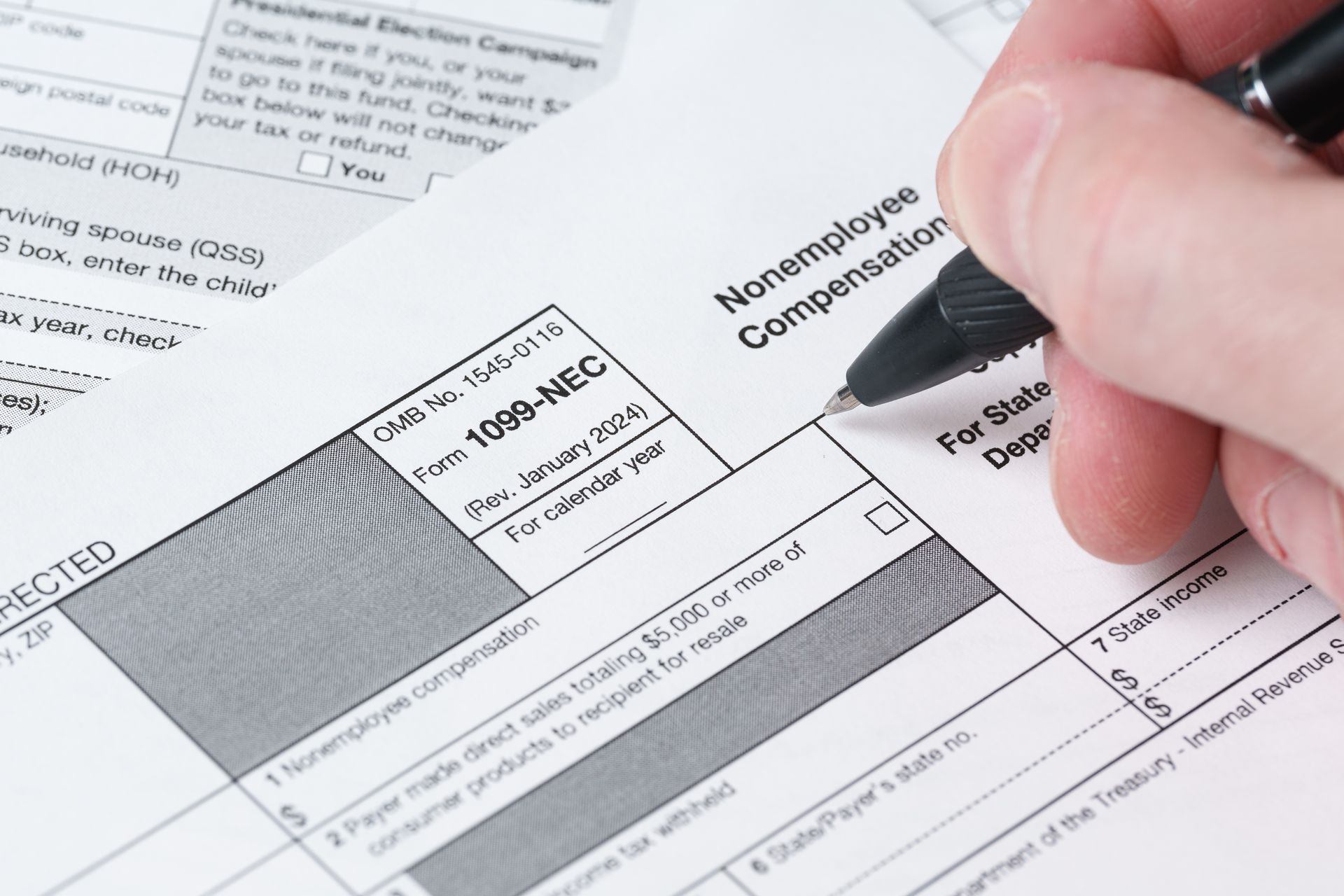
The first is worker status. Calling someone a contractor in writing doesn't make them one. The IRS looks at how the person works for you.
For federal employment tax purposes, the IRS considers:
- Behavioral control
- Financial control
- The relationship between the parties.
The federal wage and hour standard keeps shifting, too. The Department of Labor proposed another revision to its independent contractor test in early 2026, and the IRS is only one of several agencies drawing this line. Reviewing your 1099 relationships on a regular basis keeps you up to date as the rules change.
Trade Classifications on the Jobsite
The second meaning is the trade itself. On Davis-Bacon work, someone who splits a day between two trades can be paid each trade's rate for the time spent in it, provided payroll records accurately show the hours in each classification.
To pay a worker two different rates in one day, your timesheets need to show how many hours they spent on each trade. A timesheet that only lists the total hours worked isn't enough.

Workers' Comp: Where Classification Meets Cost
In Utah, with few exceptions, every employer must provide workers' compensation coverage for its employees. Premiums begin with base rates, which then get adjusted for the risk of each occupation and the employer's own claims history.
That occupation piece ties straight back to job classification. Workers' comp class codes are priced by risk, so higher-hazard work like construction typically carries higher rates. Construction wages can often be divided across codes, but only when the division appears in the original payroll records, in dollar amounts. Without that documentation, the wages go to the highest-rated classification.
How Your Claims History Affects Your Premium
Your experience modification rate, or mod rate, reflects your company's history of workers' comp claims. In Utah, base premium rates are adjusted for each employer's claims history, so your past claims affect what you pay going forward.
Under Utah law, once an employee reports an injury or illness, the employer has 7 days to report it to the workers' comp insurance carrier. If a doctor clears an injured employee for light duty and the employer offers suitable work, the employee is required to accept it or risk losing temporary disability benefits.
Check Your Subcontractors' Coverage
In Utah, general contractors are responsible for making sure their subcontractors carry workers' comp. That includes subs who work alone, like sole proprietors. Asking every sub for a current certificate of insurance is a simple way to stay on top of this. The Utah Labor Commission also offers a free coverage verification tool to confirm a policy is active.
Why These Three Belong Under One Roof
Prevailing wage, job classification, and workers' comp all require accurate time and payroll records. When separate vendors handle each of these items, the same hours get entered more than once. Each extra entry is another chance for a mistake.
Quality Payroll & Benefits, Inc. (QPB) has supported construction and skilled trades employers since 2003. Every client works with dedicated payroll and HR specialists, so the people preparing your certified payroll already know your crews, your trades, and your jobs.
Through our co-employment model, we take on administrative employer responsibilities like workers' comp administration, claims coordination, and job classification reviews, while you keep full control of your day-to-day operations.
If managing construction payroll is taking more of your time than it should, our team can help.
Contact us today for more information.